The 2009 Malevolence
A Year-Long Campaign. A Mini-Movie. A Video Game. A 749-Piece Ship Almost Nobody Built.
In 2009, LEGO ran one of the most elaborate promotional campaigns in the history of the Star Wars theme — a stealth multimedia onslaught that started in January and ended with building instructions for a midi-scale starship almost no one knew existed. This is the full story.
The Context
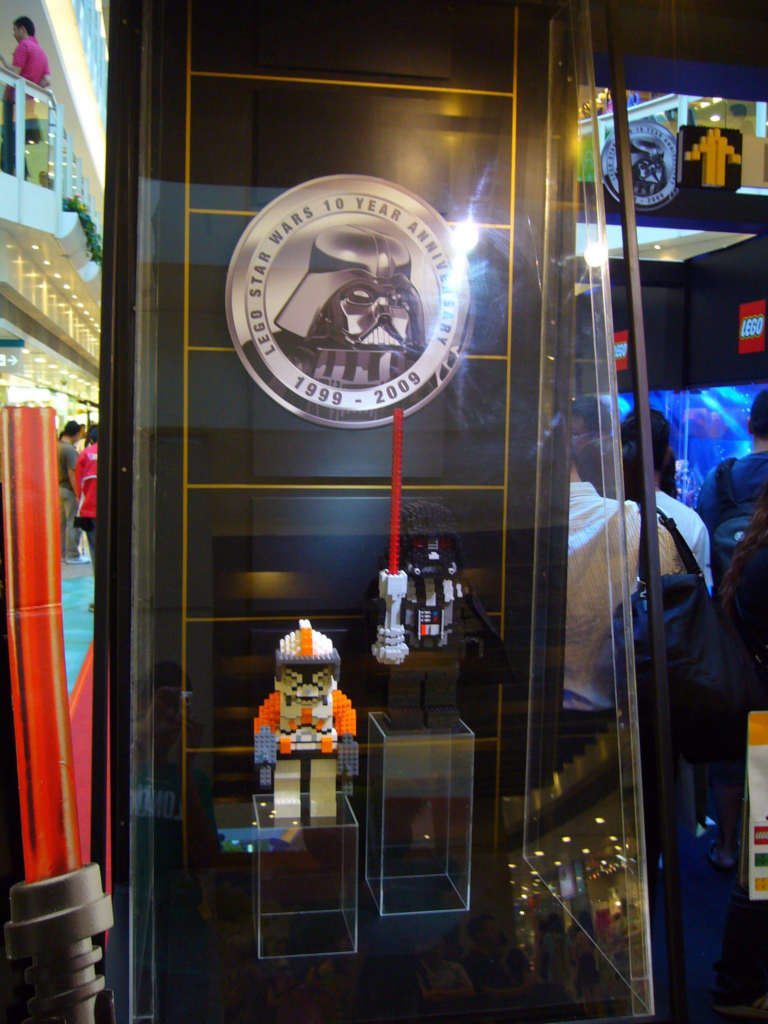
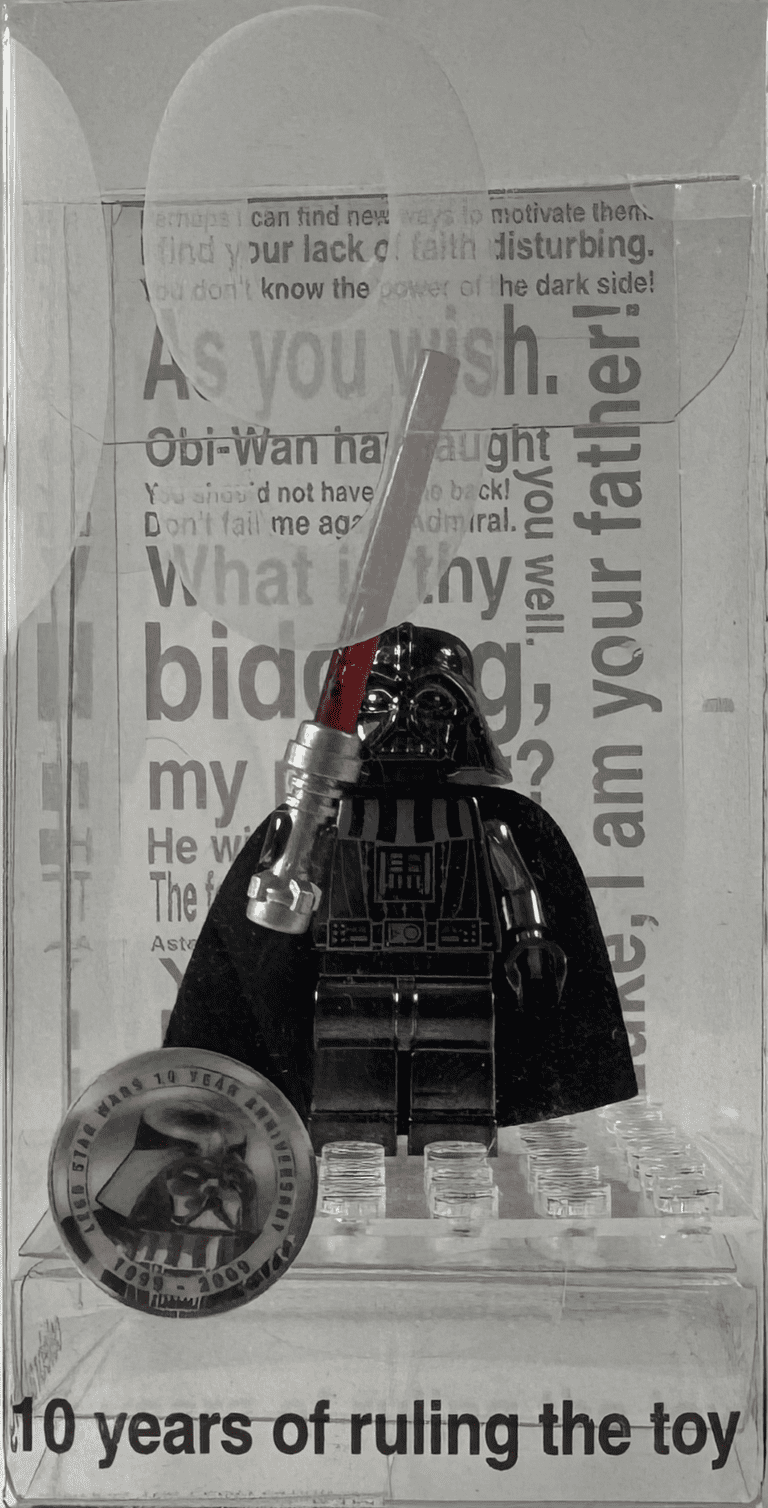
By 2009, The Clone Wars had taken over the LEGO Star Wars line. Nearly 75% of that year’s Star Wars sets were sourced from the animated series. The theme was also turning ten — LEGO’s first licensed property, launched in 1999, was celebrating a decade of sets.
To mark both milestones, LEGO devised a promotional campaign unlike anything it had done before: a coordinated, year-long multimedia event built around a single storyline — the search for R2-D2 — that unfolded across a comic strip, a web comic, a Cartoon Network mini-movie, and a browser-based video game, ending with building instructions for an original LEGO model that could only be unlocked by completing the game.
The campaign was described by The Holo-Brick Archives — the definitive LEGO Star Wars reference site, founded by Sten Funder Lysdahl at LEGO.com in 2009 and later relaunched independently — as a “stealth onslaught.” Most fans didn’t realize it was a coordinated campaign until it was already well underway.
The Campaign
The storyline was drawn from The Clone Wars Season 1 episodes Downfall of a Droid and Duel of the Droids — a two-part arc in which R2-D2 is cast adrift in space, picked up by scavengers, and sold to General Grievous. Fearing the Separatists will crack R2’s encryption and access Jedi military secrets, Anakin and Ahsoka launch a rescue mission.
The campaign rolled out in four phases across 2009:
January: The January/February issue of LEGO Club Magazine published the first installment of a comic strip titled The Hunt for R2-D2, which would run through the November/December issue — six issues across the year.
March: A separate eight-part web comic series launched on the LEGO Star Wars microsite, with one installment released each month through October. It followed the same basic plot with subtle changes to avoid spoiling the mini-movie.
May: LEGO uploaded a training level of a tie-in video game to the LEGO Star Wars microsite, allowing fans to help train Anakin and teasing that the full game was coming.
July: Through Toys R Us in Germany and the US, LEGO distributed movie-theatre-style promotional posters as a giveaway — the first public hint that something larger was coming.
August 20: A press release revealed the full campaign. The Quest for R2-D2 mini-movie would premiere on Cartoon Network on August 28 at 9pm. The full video game would follow.
The Mini-Movie
The Quest for R2-D2 was produced by M2 Films and aired on Cartoon Network on Friday, August 28, 2009 — broadcast in two halves during commercial breaks of Destroy Build Destroy. Both parts were made available in Flash format on the LEGO Star Wars website and the LEGO YouTube channel the following week, and later appeared as a bonus feature on the LEGO Star Wars: The Padawan Menace Blu-ray/DVD combo.
Running five minutes and thirty seconds, the film follows Anakin and R2-D2 attempting to escape a Separatist battleship before a lucky shot causes R2 to eject into space. Anakin returns to Coruscant, reports the loss to Obi-Wan, and is sent back with Ahsoka and an elite squad of clone troopers dispatched by Chancellor Palpatine. The Separatists — Dooku, Grievous, and Ventress — make their own play to retrieve the plans stored in R2’s memory banks before the Republic can reach him. Yoda and Obi-Wan arrive to tip the odds at the critical moment.
When R2 is finally recovered, he reveals what he was carrying: the plans to Grievous’s own flagship — The Malevolence, armed with ion cannons capable of disabling an entire fleet.
The film ends at Skywalker World, a Star Wars theme park that, as Jeremy Beckett of The Holo-Brick Archives notes, likely inspired Disney’s Galaxy’s Edge. Parked at the front gates alongside the Jedi starfighters and Republic Attack Shuttle is a banana-yellow 1932 Ford Coupe hot rod — George Lucas’s car from American Graffiti.
Packed into the five and a half minutes were product placements for 17 LEGO sets, including five unrelated to The Clone Wars:
- 7259 ARC-170 Fighter (2005) · 7656 General Grievous Starfighter (2007) · 7669 Anakin’s Jedi Starfighter (2008) · 7674 V-19 Torrent (2008) · 7680 The Twilight (2008) · 7681 Separatist Spider Droid (2008)
- 7748 Corporate Alliance Tank Droid (2009) · 7749 Echo Base (2009) · 7751 Ahsoka’s Starfighter and Vulture Droid (2009) · 8016 Hyena Droid Bomber (2009) · 8017 Darth Vader’s TIE Fighter (2009) · 8019 Republic Attack Shuttle (2009) · 8037 Anakin’s Y-wing Starfighter (2009) · 8039 Venator-Class Republic Attack Cruiser (2009)
- 10144 Sandcrawler (2005) · 10178 Motorized Walking AT-AT (2007) · 10198 Tantive IV (2009)
Notably absent from the mini-movie despite being part of the 2009 Clone Wars wave: 7752 Count Dooku’s Solar Sailor, 7753 Pirate Tank, 8014 Clone Walker Battle Pack, 8015 Assassin Droids Battle Pack, 8018 Armored Assault Tank (AAT), and 8036 Separatist Shuttle.
The Game
The Quest for R2-D2 video game was a three-way collaboration between LEGO, Argentine development studio Three Melons, and the Unity platform — then recognized as the leading 3D browser-based gaming engine. The full game was due to launch alongside the mini-movie in August but was delayed to September 26, 2009 due to development issues.
At the start of the game, the player chooses to represent the Light or Dark Side — Anakin Skywalker or Asajj Ventress. The missions are identical regardless of choice, except that Anakin moves left to right while Ventress starts from the right. Both begin at the rank of Gifted Initiate and progress through 15 locations on a holographic galactic map, with two unlocked at the start.
The game plays in 2.5D with full 3D rendering. Reviewers were genuinely surprised by the quality — one rated it above the original LEGO Star Wars Tt Games titles. The music and sound effects, initially assumed to be Lucasfilm archive samples, were original compositions by Three Melons’ musicians in Argentina.
You’re playing a proper, gorgeous, detailed LEGO game in a browser, absolutely free of charge.
Source: GameZebo
The game had faults: single-player only, save function issues, and multi-key moves like force push caused control problems. But the core gameplay was fluid and responsive, and the graphics held up remarkably well against the Tt Games titles of the era.
The real prize at the end of each character’s campaign was a set of building instructions. Completing the game as each of the four characters — Anakin, Obi-Wan, Asajj Ventress, and Count Dooku — unlocked one quarter of the instructions for The Malevolence. You had to complete the game four times to get the full model.
The game is no longer playable in standard browsers — the Unity Web Player was killed by Google’s decision to drop support for such plugins in September 2015 with Chrome’s Blink 45 release. Three Melons was acquired by Playdom in early 2010, which was itself acquired by Disney in July 2010, meaning Disney effectively holds the rights. A future port to iOS or Android would not be a shock — with the glitches fixed, the game would slot neatly into the current mobile gaming landscape.
The game can still be played via two methods. The easiest is BlueMaxima’s Flashpoint Infinity, which includes The Quest for R2-D2 in its library. The second method requires Internet Explorer 11 and the Unity Web Player, with game files available at The Holo-Brick Archives game guide.
The Ship: A History
The Malevolence — General Grievous’s flagship in The Clone Wars — has a design history that predates the animated series by several years. It was initially conceived by concept artist Erik Tiemens for Revenge of the Sith, where it appeared in early development art looking more like Jules Verne’s Nautilus. It was dropped in favor of the smaller Invisible Hand, which served as Grievous’s personal cruiser at the Battle of Coruscant.
When The Clone Wars needed a Separatist superweapon, Lucasfilm concept artist Russell Chong adapted Atsushi Takeuchi’s unused artwork, combining the curvature of a Mon Calamari cruiser with the boxy bow of a GR-75 Rebel medium transport:
It’s like an evil, monstrous version of the Rebel transport, with a lot of jagged edges on the body panels. I wanted it to be intimidating and sleek, like a mega-mouth shark.
Source: Russell Chong via The Nexus Route
According to Clone Wars creator Dave Filoni, the Malevolence’s story arc was inspired by the German battleship Bismarck — a vessel that attracted overwhelming attention from the Royal Navy and met an equally ignominious end. The ship appeared in the Season 1 premiere in July 2009 and was destroyed in the fourth episode, Destroy Malevolence, in October 2009, when Anakin caused it to crash into a moon.
The LEGO Model
The LEGO Malevolence was designed by Erik Varszegi, a model builder at LEGO’s offices in Enfield, Connecticut. Varszegi is the same designer who built the eight-foot-long Venator for the LEGO booth at Star Wars Celebration 3 in 2005 — one of the most impressive LEGO Star Wars promotional builds ever made.
The Malevolence is a midi-scale model — larger than a standard set but smaller than UCS scale — built from parts sourced exclusively from the ten Summer 2009 wave sets:
- 7748 Corporate Alliance Tank Droid
- 7749 Echo Base
- 8016 Hyena Droid Bomber
- 8017 Darth Vader’s TIE Fighter
- 8018 Armored Assault Tank (AAT)
- 8019 Republic Attack Shuttle
- 8036 Separatist Shuttle
- 8037 Anakin’s Y-Wing Starfighter
- 8038 The Battle of Endor
- 8039 Venator-class Republic Attack Cruiser
749 pieces total. The build starts with a base and stand that immediately gives off a UCS vibe. The girder-like superstructure and the stern’s engine cluster — described by Beckett as a “bunch-of-grapes” arrangement — form the backbone. A wizard’s tower houses the bridge on the poop deck, mirroring the Invisible Hand that succeeded the Malevolence as Grievous’s command ship.
The inverted lower decks of the forward structure and dual mega-ion cannon superweapons are the most technically challenging section. Watch out for page 16 of the third instruction book — it contains out-of-sequence steps. The hull plates that cover the Technic beam superstructure finish the model like oversized greebles, adding a layer of surface detail that sells the scale.
One builder’s note: the maroon 4×6 tiles with studs on the edges, with two white 2×6 plates underneath, are positioning elements for the forward structure only. They can be replaced with pieces of any color — a relief for anyone aware of how brittle decade-plus-old maroon plates can be.
The UCS-Style Plaque
Jeremy Beckett of The Holo-Brick Archives produced a printable sticker sheet for a UCS-style data plaque to accompany the model. The plaque carries the Malevolence’s in-universe specifications — manufacturer, model designation, engines, hyperdrive class, length, speed, and weapons systems — alongside a side-profile image of the ship. Adding a simple stand mod to the base allows the plaque to be displayed alongside the model in UCS fashion.
This collection’s build includes the plaque. The sticker sheet is available from The Holo-Brick Archives.
Getting the Instructions Today
The four sets of building instructions are available directly from The Holo-Brick Archives — no game required. Direct PDF downloads:
- Part One: The Stand
- Part Two: Superstructure & Stern
- Part Three: Bow & Super-Weapon
- Part Four: Hull Plates
The parts to build the model can be sourced through BrickLink. Current estimates run approximately $170 through multiple US sellers, or around €65 through European retailers — not including shipping.
Three sticker sheets are required from the original sets, making up roughly 25% of the total cost. Sourcing parts with stickers already applied reduces this significantly — Varszegi used several stickered pieces in the design so pre-applied stickers are valid and cheaper. The 7778 Midi-scale Millennium Falcon sticker sheet is the hardest to find. A reproduction graphics file by Aaron Finnegan is available for non-purists.
Jeremy Beckett’s full four-part series on the campaign at The Holo-Brick Archives is essential reading for anyone who wants the complete picture:
The game can be played today via BlueMaxima’s Flashpoint Infinity — download, search for The Quest for R2-D2, and hit play.
In This Collection
This collection’s Malevolence is built from the ten 2009 Summer wave sets using the instructions from The Holo-Brick Archives and includes Beckett’s UCS-style data plaque. It is one of only a small number of completed examples known to exist — Beckett’s estimate that fewer than a dozen midi-scale Malevolence models have ever been fully assembled is a reasonable one given how few people knew the instructions existed at all.
What We Don’t Know
- How many models were ever built — the instructions were locked behind completing a now-defunct browser game four times as four different characters. Almost no documentation of completed builds exists publicly. The true number is almost certainly in the dozens at most.
- The full web comic — the eight-part web comic series that ran on the LEGO Star Wars microsite from March through October 2009 is no longer publicly accessible. No complete archive appears to exist.
- The LEGO Club Magazine strips — the full run of The Hunt for R2-D2 comic strip across six issues of the 2009 LEGO Club Magazine has not been fully documented or archived publicly. This collection holds most of the 2009 issues — if the strips are in there, an article documenting them is coming.
- Disney’s intentions — Disney effectively owns the rights to the game via its acquisition of Playdom (which acquired Three Melons in early 2010). Whether a rerelease or port is planned has never been addressed publicly.
The Quest for The Malevolence — LEGO Star Wars 10th Anniversary Promotional Campaign (2009)
Mini-movie premiere: August 28, 2009 | Cartoon Network
Game release: September 26, 2009 | LEGO Star Wars microsite
Model designer: Erik Varszegi, LEGO Shows & Events Department
Game developer: Three Melons (Buenos Aires) / Unity
Pieces: 749 | Source sets: 10 (2009 Summer wave)
Instructions: holobrickarchives.com
Status: Built, with UCS plaque