The 1999 & 2000 LEGO Star Wars Mindstorms Sets
The Crossover Nobody Asked For
Two product lines. Two completely different audiences. One very 1999 experiment that was never repeated.
In 1999, LEGO was simultaneously riding two enormous waves. LEGO Star Wars had just launched — the most successful licensed theme in the company’s history, aimed squarely at kids and collectors who wanted to build X-Wings and lightsaber duels. LEGO Mindstorms had launched the previous year — a serious robotics platform aimed at tech-savvy builders who wanted programmable motors, sensors, and control bricks. The audiences barely overlapped. The skill sets required were completely different. The price points were in different stratospheres.
So naturally LEGO combined them.
The result was two sets that belong to both themes and fit perfectly into neither — fascinating artifacts of a specific moment in LEGO history that every serious Star Wars collector eventually acquires and almost nobody builds. This collection owns both. Neither has been built.
What Mindstorms Was
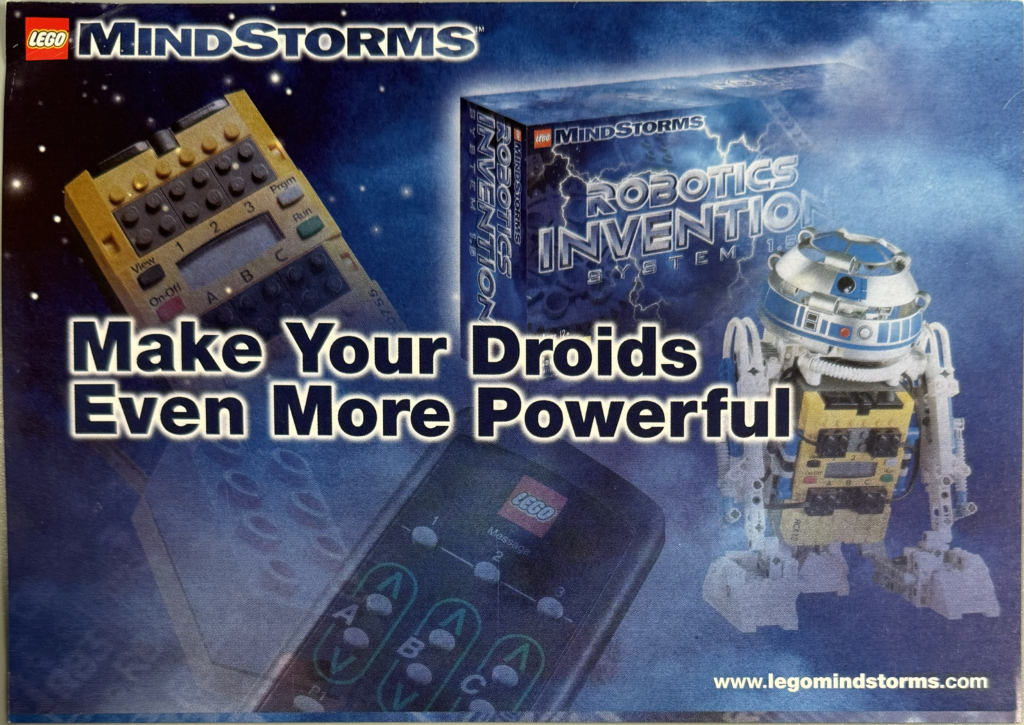
LEGO Mindstorms launched in 1998 as a consumer robotics platform unlike anything available at the time. The original RCX control brick was a programmable computer that could be connected to motors and sensors to create autonomous machines — robots that responded to light, touch, and movement without any human input after programming. It required a PC, a dedicated programming environment, and a willingness to learn a new skill set that had nothing to do with building LEGO.
It was genuinely impressive technology for 1998. It was also completely unlike anything else LEGO had ever made. The Mindstorms user was not the same person buying the 7171 Mos Espa Podrace set. They were engineers, hobbyists, and technically ambitious teenagers who wanted to build things that moved on their own.
The Star Wars Mindstorms sets used a simplified version of this platform — the Micro Scout control brick rather than the full RCX — which included a built-in light sensor, a motor, and seven pre-programmed behaviors that required no computer and no programming to activate. This was LEGO’s attempt to bring the Mindstorms concept to a broader Star Wars audience without requiring them to own a PC or learn to program. It was a reasonable compromise that satisfied neither the serious Mindstorms community nor the typical Star Wars collector.
The Sets
Two sets were produced, released a year apart and covering opposite sides of the Star Wars universe:
9748 — Droid Developer Kit (1999)
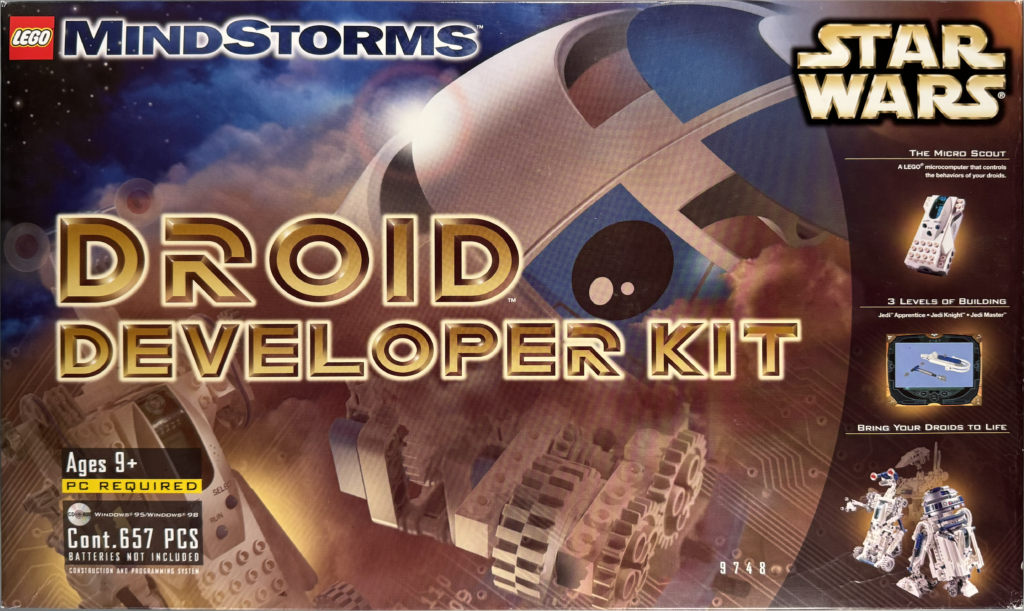
The first and larger of the two sets, containing 657 pieces and retailing for $100. The primary builds are R2-D2 and the fictional L-3GO droid — both light-side, both Episode I era. The set also includes nine snap-on assemblies and partial instructions for more advanced builds including a Battle Droid and a Gungan Sub, with the CD-ROM providing the full guided building experience.
The packaging is a large flat box — approximately 18.9 × 11.4 × 2.75 inches — with a molded plastic part tray on the inside that holds the components in organized positions. The tray is one of those details that distinguishes the premium sets of this era from standard boxed sets, and a complete example with all parts seated correctly in the tray is increasingly rare to find.
Current value: approximately $267 new, $66 used.
9754 — Dark Side Developer Kit (2000)
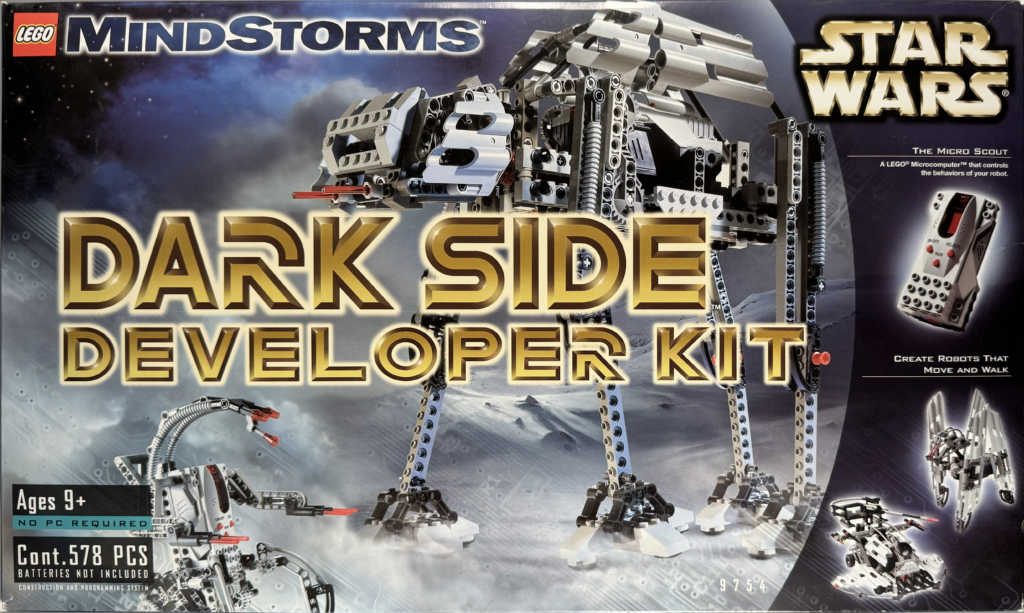
Released the following year, the Dark Side Developer Kit contains 578 pieces — slightly fewer than its predecessor — at the same $100 price point. Where the Droid Developer Kit was focused on a single character across multiple configurations, the Dark Side kit takes a more ambitious approach: three completely different dark-side vehicles from three different Star Wars eras. The AT-AT from the Original Trilogy. The Destroyer Droid (Droideka) from The Phantom Menace. The Vulture Droid, also from the prequel trilogy.
Same Micro Scout brick, same internal plastic part tray format, but no CD-ROM dependency for the full building experience. The dark-side theming and multi-era scope give this set a slightly more interesting collector profile than the Droid Developer Kit despite its lower piece count.
Current value: approximately $195 new, $85 used.
The CD-ROM Problem
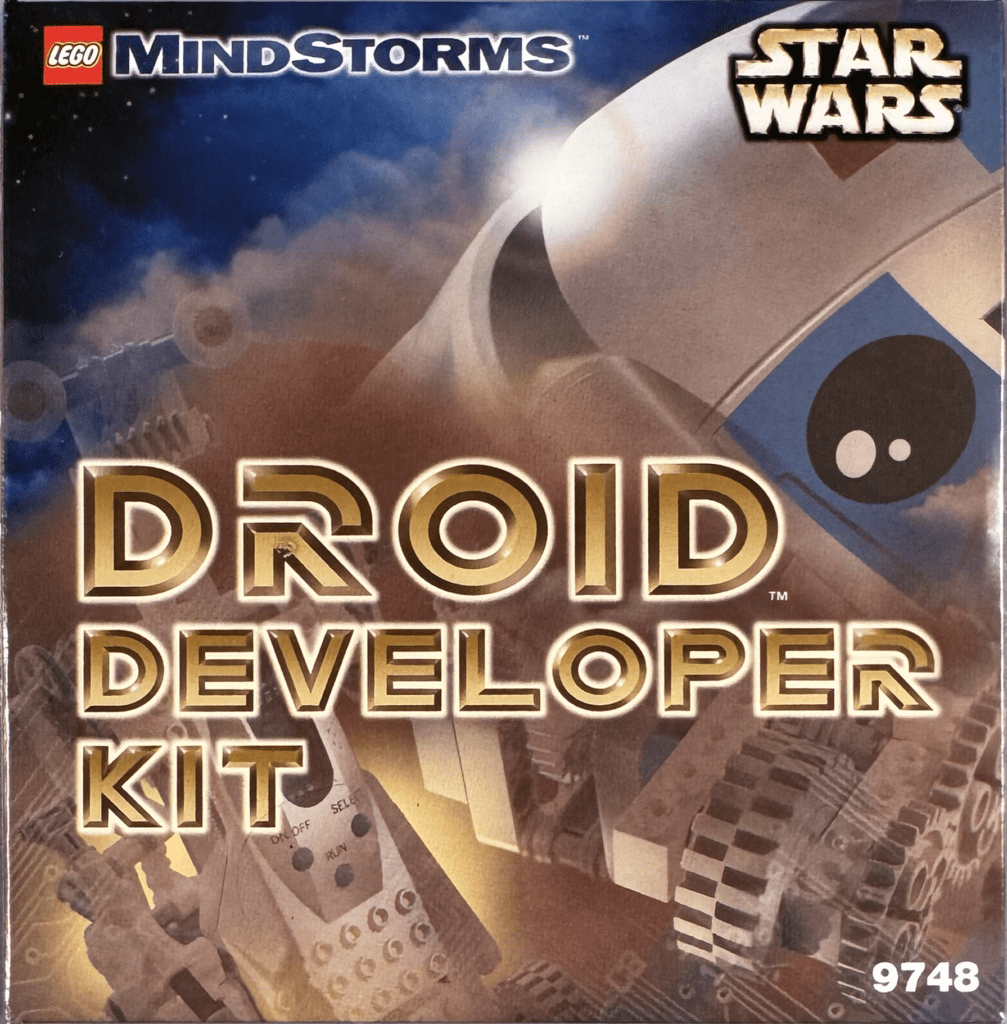
The Droid Developer Kit set was designed around CD-ROM guided building experiences — step-by-step instructions delivered through software rather than printed booklets. In 1999 this felt like the future. In 2026 it is a significant problem.
The CD-ROMs were PC-only. They required operating systems that no longer exist. The software was never updated and is not compatible with modern Windows, let alone macOS. A collector who wants to experience these sets as they were intended to be experienced needs a working period-correct PC — a Windows 98 or Windows 2000 machine — to run the software. That is not a trivial ask in 2026.
Printed instructions do exist — LEGO has made PDF versions available for the primary builds — but the guided CD-ROM experience, including the nine snap-on assemblies and the advanced builder challenges, exist only on the disc. A sealed example complete with the original CD-ROM is more desirable than one without it, even though neither can easily be used as intended.
The CD-ROM dependency is a time capsule in the most literal sense. These sets are frozen in a specific technological moment that has completely passed.
The Technology Gap
In 1999 the Micro Scout control brick was genuinely impressive consumer electronics. A self-contained programmable motor with a built-in light sensor and multiple autonomous behaviors, packaged inside a LEGO brick — for a hundred dollars, available at retail. Nothing quite like it had existed at that price point before.
In 2026 it is charmingly primitive. The processing power in the Micro Scout is vastly exceeded by the chip in a modern key fob. The seven pre-programmed behaviors that seemed like magic in 1999 look like blinking and rolling in a straight line by contemporary standards. LEGO’s current Mindstorms and Technic robotics sets are incomparably more capable.
This is not a criticism — it is what makes these sets interesting as historical artifacts. They document exactly what consumer robotics looked like at the moment LEGO Star Wars was born. They are a timestamp.
The Completist’s Burden
Let’s be honest about something. Most serious LEGO Star Wars collectors own these sets because they have to, not because they want to. They are not the most exciting items in the LEGO Star Wars catalog. They are not particularly displayable. They cannot be meaningfully experienced without period-correct hardware. And they occupy an awkward space between two product lines that were never really meant to overlap.
But completeness is completeness. The 9748 and 9754 are LEGO Star Wars sets. They are from 1999 and 2000. They are increasingly difficult to find in complete condition with the CD-ROM intact. A serious collection that doesn’t include them has a gap — a small gap, perhaps, but a gap nonetheless.
They also reward the kind of collector who finds historical context interesting. The story of why these sets exist — the collision of Mindstorms and Star Wars at exactly the right commercial moment in 1999, the simplified Micro Scout compromise, the CD-ROM bet on a technology that aged poorly — is genuinely worth knowing. These are not great sets. They are fascinating ones.
Collecting Advice
A complete example of either set should include the box, the internal plastic part tray, all parts, the instruction booklets, and the CD-ROM. Examples missing the CD-ROM are significantly more common and command lower prices. The Micro Scout brick should be tested before purchase if possible — the motor and light sensor can fail with age, and a non-functional Micro Scout in an otherwise complete set is a meaningful deficiency.
Sealed examples of both sets exist and command substantial premiums. Given the CD-ROM dependency and the declining relevance of the Micro Scout as a functional object, the collector case for sealed examples is primarily about preserving the artifact rather than ever using it — which is a perfectly legitimate reason to collect anything.
9748 Droid Developer Kit
Released: 1999 | Pieces: 657 | RRP: $100 | Age: 9+
Primary builds: R2-D2, L-3GO droid
Current value: ~$267 new, ~$66 used
Brickset: 9748-1 | BrickLink: 9748-1
9754 Dark Side Developer Kit
Released: 2000 | Pieces: 578 | RRP: $100 | Age: 9+
Primary builds: AT-AT, Destroyer Droid, Vulture Droid
Current value: ~$195 new, ~$85 used
Brickset: 9754-1 | BrickLink: 9754-1